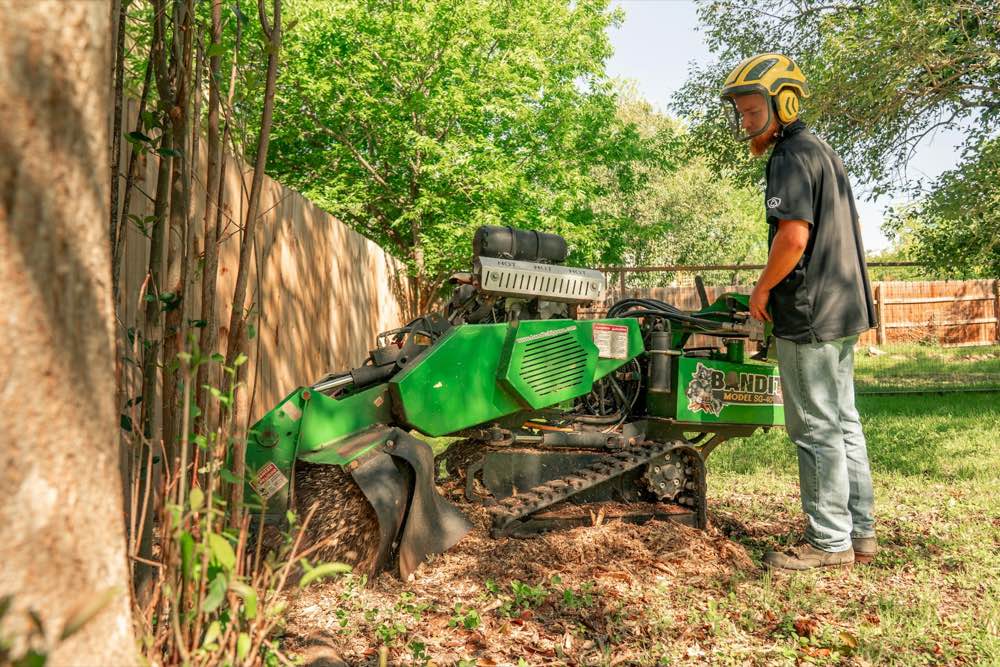
What stump grinding is
A stump grinder is a machine with a spinning cutting wheel lined with carbide teeth. The operator sweeps the wheel back and forth across the stump, turning the wood into chips, and works down below the soil line. The roots below and around the stump stay in the ground and rot away over time.
Grinding is the most common way to deal with stumps in Macon yards. It's faster and much less disruptive than digging a stump out, and it leaves the area ready for topsoil and grass.
When to grind a stump
- After a tree removal, when the quote left a stump behind.
- When an old stump is in the way of mowing or a project.
- When a stump keeps sprouting new shoots (common with sweetgum and some oaks).
- When a rotting stump is drawing ants, termites, or other insects close to the house.
- Before laying sod, putting in a garden bed, or building a patio or fence line.
How deep do they grind?
Depth is the main thing to agree on. Many crews grind several inches below grade, which is enough for grass. If you plan to plant a tree nearby, put in a fence post, or pour concrete, ask for deeper grinding and say what you're planning. Surface roots running out from the stump can be ground too, but each one adds time.
How the job usually goes
- Locate utilities. Before grinding, contact Georgia 811 or have the crew request a locate, so buried lines are marked. Georgia law requires a locate before digging with machinery, and a stump grinder cuts below ground. Grinders cut into the ground, and gas, electric, and irrigation lines are sometimes closer than people expect.
- Clear around the stump. Rocks, bricks, and metal can damage the grinder or get thrown. The crew clears the area and sets up shields if windows or cars are nearby.
- Grind. A typical residential stump takes from a few minutes to an hour, depending on size and wood.
- Clean up. The grindings are left in the hole, raked out, or hauled away, depending on what you agreed to.
About the grindings
Grinding leaves a pile of chips and soil, often more than people expect. You can use it as mulch elsewhere (away from the house), or have it hauled. If you want to plant grass in the spot, most of the chips need to come out and topsoil go in, since fresh wood chips break down slowly and tie up nitrogen while they do.
What affects the price
Stump diameter is the biggest factor, measured across the widest point at ground level. Other factors: how many stumps, the wood (hardwoods like oak take longer than pine), access for the grinder (narrow gates may need a smaller machine), surface roots, depth, and whether you want grindings hauled away. Many pros have a minimum charge for a single small stump, so grouping stumps together is often cheaper per stump. See the cost guide.
Safety notes
Grinders throw chips and debris hard. Keep kids and pets inside while the machine is running. Don't try to grind near unmarked utilities. Renting a grinder is possible, but they're heavy, dangerous machines and easy to get stuck on wet Georgia clay.
Frequently asked questions
Will the stump grow back after grinding?
Most stumps won't. Some species can send up sprouts from the remaining roots for a while. Cut or mow them, and they usually stop.
What's the difference between grinding and stump removal?
Grinding takes the stump down below the surface and leaves roots in the ground. Stump removal pulls out the stump and main roots, which leaves a bigger hole and costs more.
Can I plant a new tree in the same spot?
It's better to plant a few feet away, where there aren't old roots and decaying chips.
Do I need to be home?
Usually not, as long as the crew can reach the stump and knows which ones to grind. Mark them clearly.