The short answer
Most standard homeowners policies follow the same basic pattern:
- Tree falls on your house, garage, shed, or fence: usually covered, if the cause is a covered event such as wind, lightning, or hail. The policy typically pays to repair the structure and, up to a limit, to remove the tree from it.
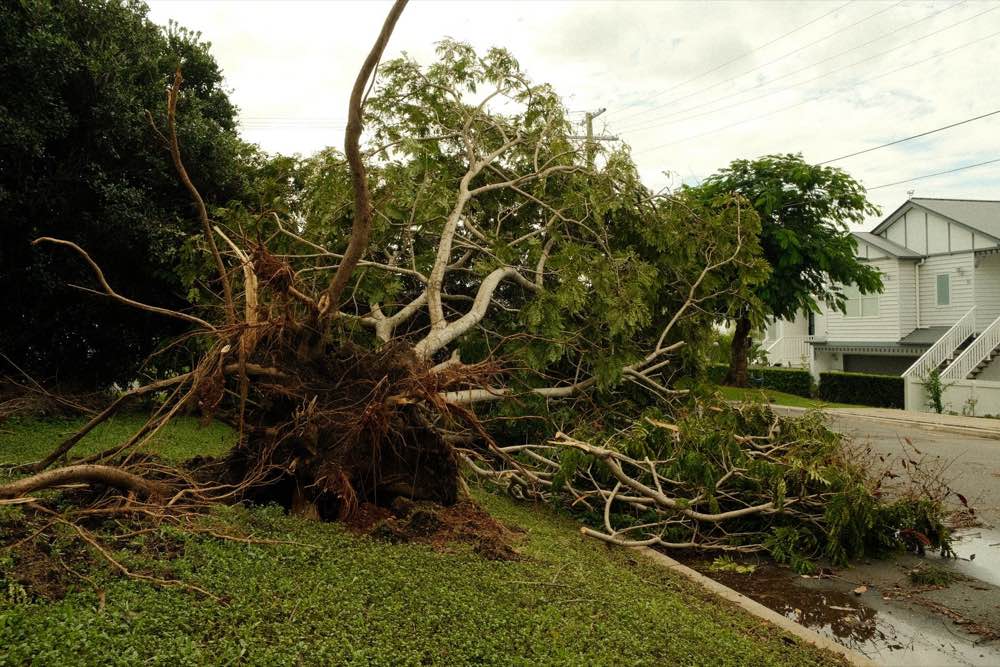
- Tree falls in your yard and hits nothing: usually not covered. Some policies make an exception when the tree blocks your driveway or a wheelchair ramp.
- Healthy or dying tree you want taken down before it falls: almost never covered. That's considered maintenance.
- Tree falls on your car: that's usually handled by the comprehensive part of your auto policy, not your homeowners policy.
Every policy is different, so treat this as a guide to the questions to ask, not an answer about your own coverage. Your declarations page and the "debris removal" and "trees, shrubs, and other plants" sections of your policy have the real numbers.
How much will the policy pay toward removal?
Tree removal is usually paid under a debris removal provision that has its own cap. National consumer guides from NerdWallet and Bankrate describe common limits of around $500 to $1,000 for tree debris removal, either per tree or per claim. Your deductible also applies.
That matters because removing a large tree from a roof can cost well beyond that cap, especially if a crane is needed. See our tree removal cost guide for typical ranges. The structure repair is generally a separate part of the claim from the tree removal itself.
When claims get denied
The most common reasons a tree claim is reduced or denied:
- Neglect. If the tree was obviously dead or rotting before it fell, the insurer may argue the loss came from lack of maintenance, not a storm.
- Nothing covered was damaged. A tree that falls across the back yard and misses everything is usually your cost to clean up.
- The cause isn't covered. Most policies list the perils they cover. Flood, for example, is excluded from standard homeowners policies.
- The cleanup is beyond the cap. The claim is paid, but only up to the debris removal limit.
If you have a tree you're worried about, dealing with it before a storm is usually cheaper than arguing about it afterward. See dead tree removal and hazardous tree removal.
What to do after a tree hits your house
- Get everyone safe. If a tree is touching a power line, stay back and call your electric utility or 911. Don't go into rooms where the ceiling is damaged.
- Take photos and video of the tree, the damage, and the stump or root ball before anything is moved. Wide shots and close-ups.
- Call your insurance company or agent and open a claim. Ask what they need from you and whether they want an adjuster to see it before the tree is moved.
- Prevent more damage. Most policies expect you to take reasonable steps, such as tarping a hole in the roof. Keep receipts.
- Get a written estimate that separates the cost of removing the tree from the house from the cost of cleaning up the rest of the yard. Insurers often treat those differently.
- Keep copies of everything: estimates, invoices, photos, and notes from calls.
If the tree needs to come off the house quickly, call (478) 309-7511 and we'll try to connect you with a local pro who handles emergency tree removal.
If the tree came from a neighbor's yard
In Georgia, who pays usually depends on whether the tree's owner knew, or should have known, the tree was a danger. In many cases each homeowner goes through their own insurance. Our guide to when a neighbor's tree falls on your property covers it in more detail.
Questions to ask your insurance agent
- Is tree removal covered if a tree falls on my house? On my fence? On my driveway?
- What is my debris removal limit for trees, and is it per tree or per claim?
- Does my deductible apply to tree removal?
- Do you need to inspect before the tree is removed?
- Will you pay for emergency tarping or board-up?
If you have trouble with a claim, the Georgia Office of Insurance and Safety Fire Commissioner handles consumer questions and complaints about insurance companies.
Frequently asked questions
Will insurance pay to remove a dead tree before it falls?
Usually not. Removing a standing tree, even a dead one, is generally treated as maintenance. The upside of removing it yourself is avoiding a bigger, denied claim later.
Does insurance cover stump grinding?
Usually not. Debris removal coverage is about getting the fallen tree off the covered structure. Stump grinding is normally the homeowner's cost.
Can the tree company bill my insurance directly?
Some will work with your insurer or accept an assignment of payment, others want payment from you and you get reimbursed. Ask before work starts, and read anything you sign.
Is this legal or insurance advice?
No. Macon Tree Removal Pros is a referral service, not an insurance agent or lawyer. Your policy and your insurer decide what's covered.